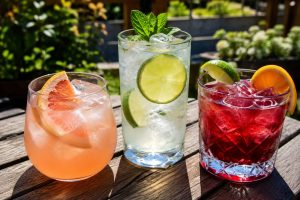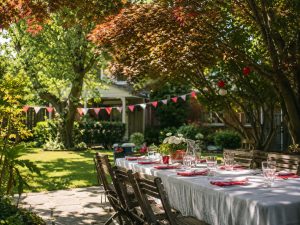

The working rule most hosts use: one drink per guest for each hour of the party, plus one extra for the first hour, because people drink faster at the start while they’re finding their feet. For ten people over four hours, that’s roughly 50 drinks.
That number will feel high. It usually is, for a specific reason: it assumes everyone drinks at the same steady rate, and almost nobody does. Treat it as a ceiling rather than a shopping list, then adjust down using everything below.
The quick table
Total drinks to have available, assuming a mixed group where most people are drinking:
| Guests | 2 hours | 3 hours | 4 hours | 5+ hours |
|---|---|---|---|---|
| 6 | 18 | 24 | 30 | 36 |
| 10 | 30 | 40 | 50 | 60 |
| 15 | 45 | 60 | 75 | 90 |
| 20 | 60 | 80 | 100 | 120 |
| 30 | 90 | 120 | 150 | 180 |
A “drink” here means one standard serving. In Canada that’s 341 mL of 5% beer, 142 mL of 12% wine, or 43 mL of 40% spirits — a can, a modest glass, or a single shot. They’re deliberately equivalent, which is what makes the arithmetic below work, and they’re the measures used in Canada’s own guidance on alcohol.
Turning drinks into bottles
This is where most people lose the thread. Servings per container:
- Beer or cider: 1 can or bottle = 1 serving. A 24-pack is 24 drinks. Refreshingly simple.
- Wine: a 750 mL bottle = 5 servings. Realistically 4, because nobody pours a measured 142 mL at a party.
- Spirits: a 750 mL bottle = about 17 servings. A 1.14 L bottle = about 26.
- Ready-to-drink cans: 1 can = 1 serving, though strengths vary more than people expect. Check the percentage.
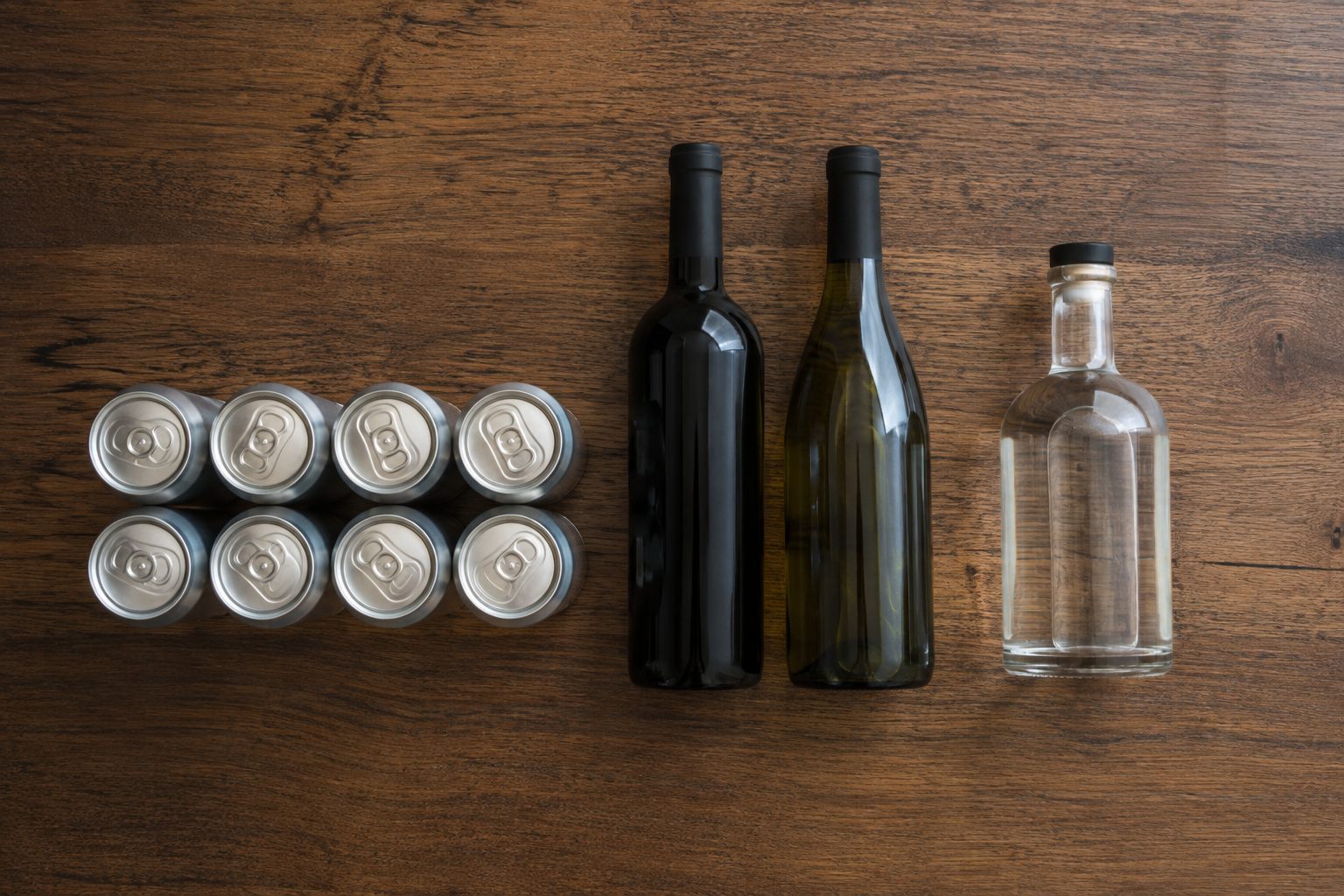
So for that ten-person, four-hour party needing ~50 drinks, a realistic split might be two 24-packs of beer (48), four bottles of wine (~20) and one 750 mL bottle of spirits (~17). That’s 85 servings — well over 50, and that’s fine. The surplus keeps.
How the split usually falls
Across a typical mixed group, expect something close to:
- Half beer and RTDs. The default for people who want one drink in hand all evening.
- A third wine. Skews higher at dinners and sit-down events, lower at anything standing.
- The rest spirits. Small in volume, but it’s the category people notice the absence of.
Adjust for what you actually know about your guests rather than the averages. A group that drinks wine almost exclusively is not going to work through two cases of beer to be polite.
The five mistakes
Buying for the peak, not the average. Not everyone is drinking at the same time. Some arrive late, some leave early, some nurse one glass all night. The ceiling assumes a room drinking in unison, which never happens.
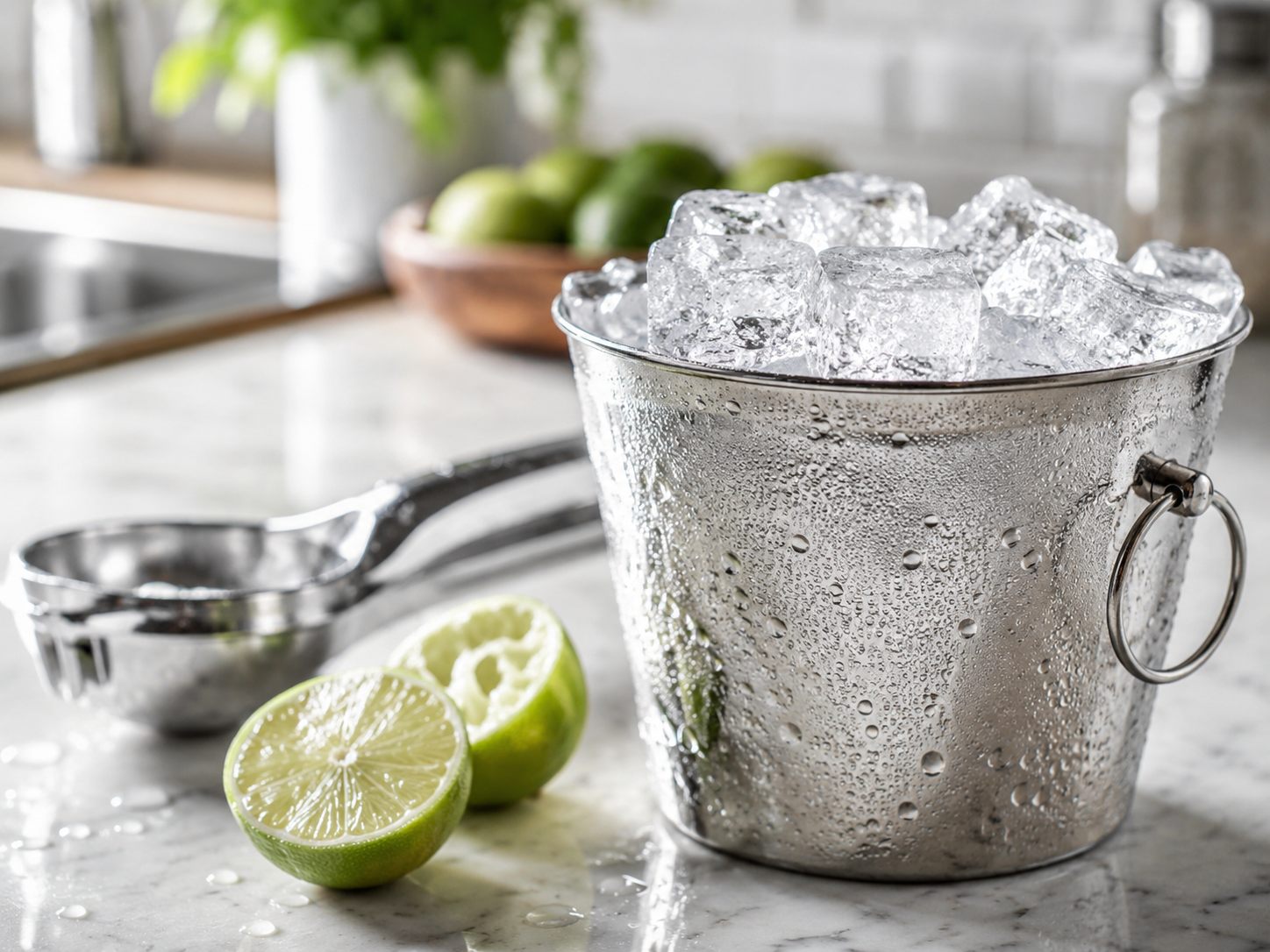
Forgetting mixers and ice. A bottle of gin is useless without tonic. Plan roughly 1 L of mixer per bottle of spirits, and far more ice than feels sensible — about 0.5 kg per guest if drinks are being built rather than poured. Ice is the single most commonly underestimated item.
Too much variety, not enough of anything. Six kinds of beer in fours means you run out of the good one in twenty minutes and are left with the rest. Two options in quantity beats six in miniature.
No non-alcoholic option. Someone will be driving, pregnant, on medication, or simply not drinking. A jug of something decent that isn’t tap water costs almost nothing and matters more than an extra bottle of wine.
No food. Not strictly a buying mistake, but it changes everything about how an evening goes. Food slows the rate people drink and keeps the party where you want it.
Adjusting the number down
Reasons to buy less than the table says:
- It’s a dinner rather than a party. Seated events run at roughly half the rate of standing ones.
- It’s a weeknight. People pace themselves when there’s work tomorrow.
- Guests are driving. In the GTA, a suburban party where most people arrive by car has a fundamentally different consumption profile from a downtown one where everyone takes transit.
- It’s a mixed-age or family gathering. The all-adults-drinking assumption doesn’t hold.
Reasons to buy more: it’s a long weekend, it’s a milestone birthday, or it’s a group that knows each other well. Familiarity extends parties considerably.
What keeps and what doesn’t
Over-buying is only really a problem if it doesn’t keep. Sealed spirits last essentially forever, and an unopened bottle of whisky, vodka or rum is never wasted money. Unopened wine keeps for years. Beer is the one with a real clock on it — check the date, and don’t buy three cases of something you won’t drink yourself.
Which suggests an obvious strategy: buy beer conservatively and spirits generously. The failure mode is asymmetric.
Buying it in the GTA
Where you shop changes what you can get, and in Ontario the rules are specific enough to plan around.
- The LCBO carries the full range including spirits, but closes earlier than people expect — often 9 or 10 p.m. on a weeknight and around 6 p.m. on a Sunday, and it varies store by store. Worth checking the store locator rather than guessing, especially in Scarborough, Brampton or Mississauga where hours run shorter than downtown Toronto.
- Licensed convenience and grocery stores sell beer, cider, wine and ready-to-drink cans until 11 p.m. every day. They cannot sell spirits, which catches out a lot of hosts who assumed a late corner shop had them covered.
- The Beer Store is beer only, and its network across the GTA has thinned considerably. Check yours is still open before driving.
All Ontario retail alcohol sales stop at 11 p.m., and licensed delivery stops at 11 p.m. too — the AGCO sets both windows province-wide. There’s no late-night exception anywhere.
If you get it wrong on the night
It happens, usually around nine o’clock. Given that 11 p.m. ceiling, the practical question is whether you notice in time.
Options once you’re short: a nearby licensed convenience or grocery store if you need beer, wine or cider, or a licensed delivery service, which can bring the full range including spirits to your door anywhere across Toronto, Scarborough, North York, Etobicoke, Mississauga, Brampton, Vaughan or Markham without anyone leaving the party. Either way, deal with it before eleven rather than at five past.
The short version
Start with one drink per guest per hour, add one for the first hour, then adjust down for the things you actually know about the evening. Split it roughly half beer, a third wine, the rest spirits. Buy far more ice than you think. Have something good for the people who aren’t drinking. And keep an eye on the clock — the shops close at eleven whether the party’s finished or not.
After Hours Alcohol delivers across Toronto and the GTA. You can browse the full menu or call or text (416) 988-3623 if you’d rather not do the shopping yourself. If you’re setting up for the longer term, our guide to building a home bar on a budget covers what’s worth keeping in the house.