
You have four realistic options once the LCBO has closed for the night in Toronto or the GTA: a licensed convenience or grocery store, a Beer Store if one near you is still standing, a bar or restaurant selling sealed takeout, or a licensed liquor delivery service. Which one works depends almost entirely on what you’re after, because only two of the four can legally sell you spirits.
And every one of them stops at 11 p.m. Ontario caps retail liquor sales at 11 p.m. and liquor delivery at 11 p.m., seven days a week, with no late-night exception anywhere in the province. If you take one thing from this guide, make it that number.
This is the full picture: what closes when, what each channel is allowed to sell, how the rules actually work at the door, and how to plan around the gaps.
The 11 p.m. rule that governs everything
Two provincial limits sit underneath every option below, both set by the Alcohol and Gaming Commission of Ontario:
- Retail sale of liquor: 7 a.m. to 11 p.m., Monday through Sunday. This applies to every store licensed to sell alcohol in Ontario, including the LCBO, the Beer Store, grocery and convenience stores.
- Delivery of liquor: 9 a.m. to 11 p.m., any day. This applies to licensed liquor delivery services.
A store being open 24 hours does not mean it can sell you alcohol at 1 a.m. Licensed shops that trade overnight are required to physically block access outside permitted hours, which is why you’ll see beer fridges padlocked or a till that simply refuses to scan the item. The staff aren’t being difficult. They’re following the rule that keeps their licence.
Ontario changed a number of liquor distribution rules on 1 July 2026 under the Liquor Licence and Control Act, including new pathways for stores to move stock between locations. Delivery hours were not among the changes — they remain 9 a.m. to 11 p.m.
So if it’s 12:30 a.m., the honest answer is that nothing in Ontario can legally sell or deliver you alcohol, and any service claiming otherwise is describing something the province does not permit. Worth knowing before you hand your card details to it.
When each option actually closes
| Where | Typical weeknight close | Sunday | Hard legal ceiling |
|---|---|---|---|
| LCBO | 9–10 p.m., varies by store | Often 6 p.m. | 11 p.m. |
| The Beer Store | 9–11 p.m., varies | Reduced | 11 p.m. |
| Licensed convenience / grocery | Up to 11 p.m. | Same as any day | 11 p.m. |
| Bar / restaurant takeout | Varies by licence | Varies | 11 p.m. |
| Licensed delivery | 11 p.m. | Same as any day | 11 p.m. |
The pattern worth internalising: the LCBO closes earliest and varies most; convenience stores and delivery hold the same window every day of the week. That difference is at its widest on a Sunday.
The spirits gap, and why it matters most
This is the part that sends people back out a second time.
Licensed convenience, grocery and big-box stores in Ontario can sell beer, cider, wine and ready-to-drink beverages. That’s the complete list. They cannot sell spirits — no vodka, whisky, rum, gin, tequila or cognac, in any size, at any hour.
So once the LCBO has closed, your options for a bottle of spirits narrow to two: a bar or restaurant selling sealed takeout, which tends to be limited and expensive, or a licensed delivery service, which can carry the full range.
If you’re after beer or wine, you have far more room. If you’re after vodka, whisky, rum, gin, tequila or cognac, plan accordingly.
Option 1: The LCBO
Still the widest selection in the province and the only bricks-and-mortar chain carrying the full range of spirits. The catch is hours.
- Weeknights: most Toronto locations close at 9 or 10 p.m. A small number of downtown stores run to 11 p.m.
- Sundays: many stores close at 6 p.m., some earlier in the suburbs. This is the single most common way people get caught out.
- Suburbs close earlier. Stores across Scarborough, Brampton, Ajax and Oshawa generally keep shorter hours than downtown Toronto.
Hours are set per store, not per chain, so the only reliable answer is the LCBO store locator. Thirty seconds there beats a wasted drive.
Option 2: Licensed convenience and grocery stores
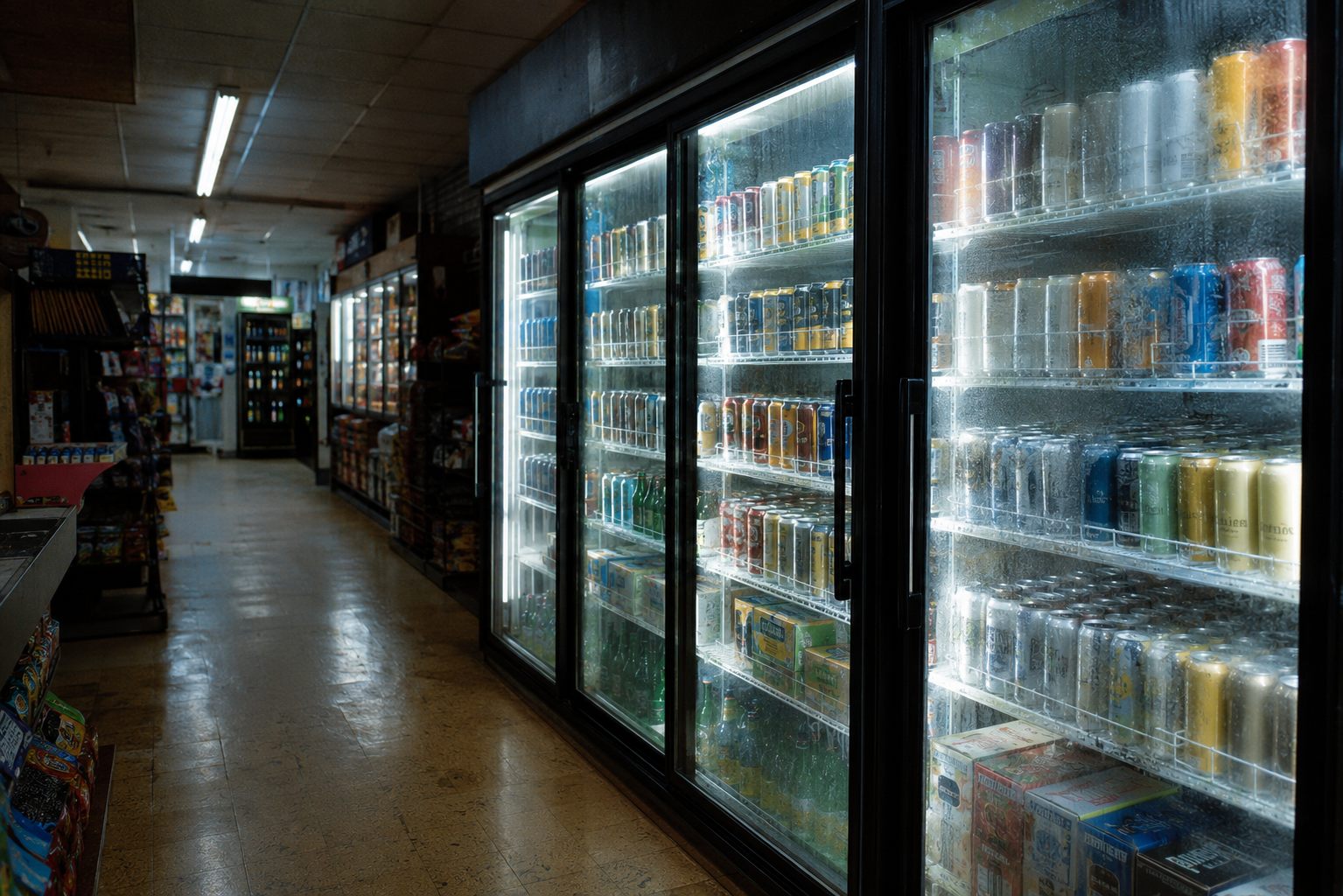
The biggest change to Ontario’s alcohol market in a generation. Licensed convenience stores began selling beer, cider, wine and ready-to-drink products on 5 September 2024, and the rollout has been substantial: the AGCO had issued 7,115 convenience and grocery store liquor retail licences as of late September 2025, against a projected ceiling of roughly 8,500 locations.
Practical notes before you walk over:
- No spirits. Covered above, but it’s the thing people forget.
- Not every corner store qualifies. Convenience store eligibility is limited to smaller-format shops — broadly, 4,000 square feet or less of retail floor space — and the store has to hold a licence. Plenty still sell nothing.
- Selection is thin. A convenience store carries what fits in one fridge and a short aisle. Expect mainstream domestic beer, a handful of wines and a wall of RTDs.
- The 11 p.m. cutoff is enforced at the till. Arriving at 10:58 with a full basket is not a plan.
The AGCO publishes a live list of licensed convenience and grocery stores, which is the only authoritative way to know whether a specific shop can sell you anything.
Option 3: The Beer Store, while it lasts
Beer only, and a shrinking network. The Beer Store has closed dozens of locations across Ontario since the province opened beer sales to grocery, convenience and big-box retail in July 2024. An agreement obliging it to keep at least 300 stores open ran to the end of 2025; from 1 January 2026 it has been free to close as many as it chooses, and it announced a fresh round almost immediately — including locations in Brampton and Etobicoke, both inside the GTA.
The practical upshot: the branch you relied on two years ago may not be there. Check before you drive, particularly outside the core.
Option 4: Bar and restaurant takeout
Licensed establishments can sell sealed alcohol to take away, generally alongside a food order. It’s a genuine fallback if you’re near a pub that’s still serving, and it’s one of only two routes to spirits after the LCBO shuts.
Set expectations, though. Selection is whatever’s behind the bar, pricing reflects a bar’s margins rather than a retailer’s, and the establishment’s own licence conditions determine how late it can sell. Fine for a bottle of wine on the way home; not the way to stock a party.
Option 5: Licensed liquor delivery
This is where the spirits gap closes. A licensed liquor delivery service can bring the full range to your door — spirits included — within the 9 a.m. to 11 p.m. window, seven days a week, including Sundays and most holidays when the LCBO is shut.
Ontario licenses these services formally. The category was renamed to the General Delivery Licence on 1 July 2026 (it was previously the Licence to Deliver), and everyone involved in delivering alcohol has to hold AGCO-approved responsible service certification. A legitimate operator will be able to tell you it’s licensed. That’s a fair question to ask.
The main planning point is lead time. The cutoff is when the delivery happens, not when you place the order. Ordering at 10:55 for an 11:20 arrival doesn’t work. Give it a comfortable margin.
What actually happens at the door
Ontario’s delivery rules are specific, and a licensed service follows all of them. None of this is optional or negotiable:
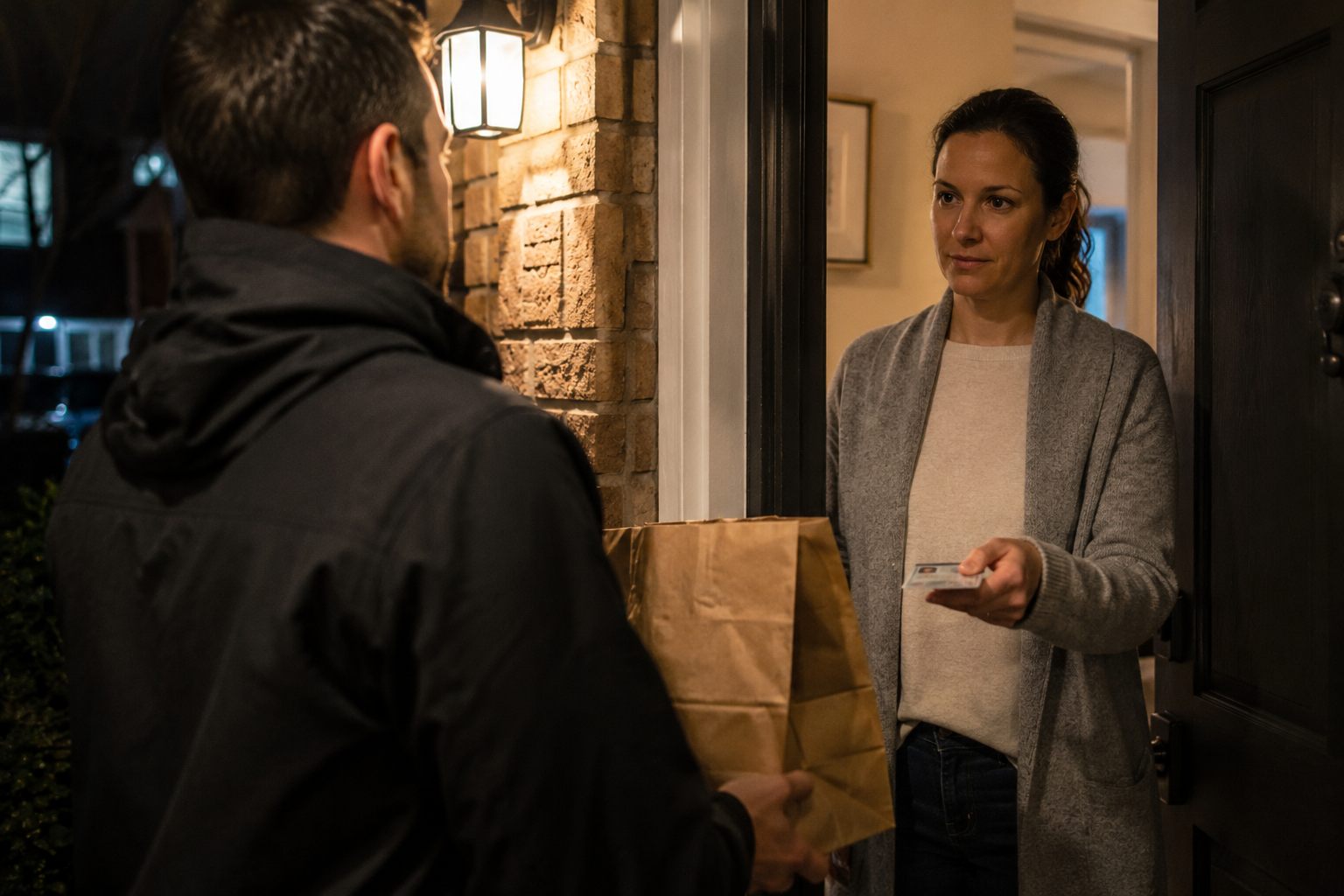
- ID gets checked. Government-issued photo identification showing your date of birth — driver’s licence, passport, citizenship card, and similar. Legal drinking age in Ontario is 19. Have it out and it takes five seconds.
- Residence or private place only. Not a park, a street corner, a parking lot, an office lobby or a hotel hallway. A driver who agrees to meet you in a park is breaking the terms of the licence.
- Sealed and untampered. Containers are handed over unopened, and the driver confirms that before release.
- Drivers must refuse. If someone appears intoxicated, the delivery does not happen. It isn’t a judgment the driver enjoys making — the rule exists to protect the licence and the customer, and it applies regardless of what’s already been paid.
Knowing this in advance removes most of the friction. The deliveries that go badly are almost always the ones where nobody expected an ID check.
Across the GTA
Coverage isn’t uniform across the region, and it’s worth knowing where the gaps sit.
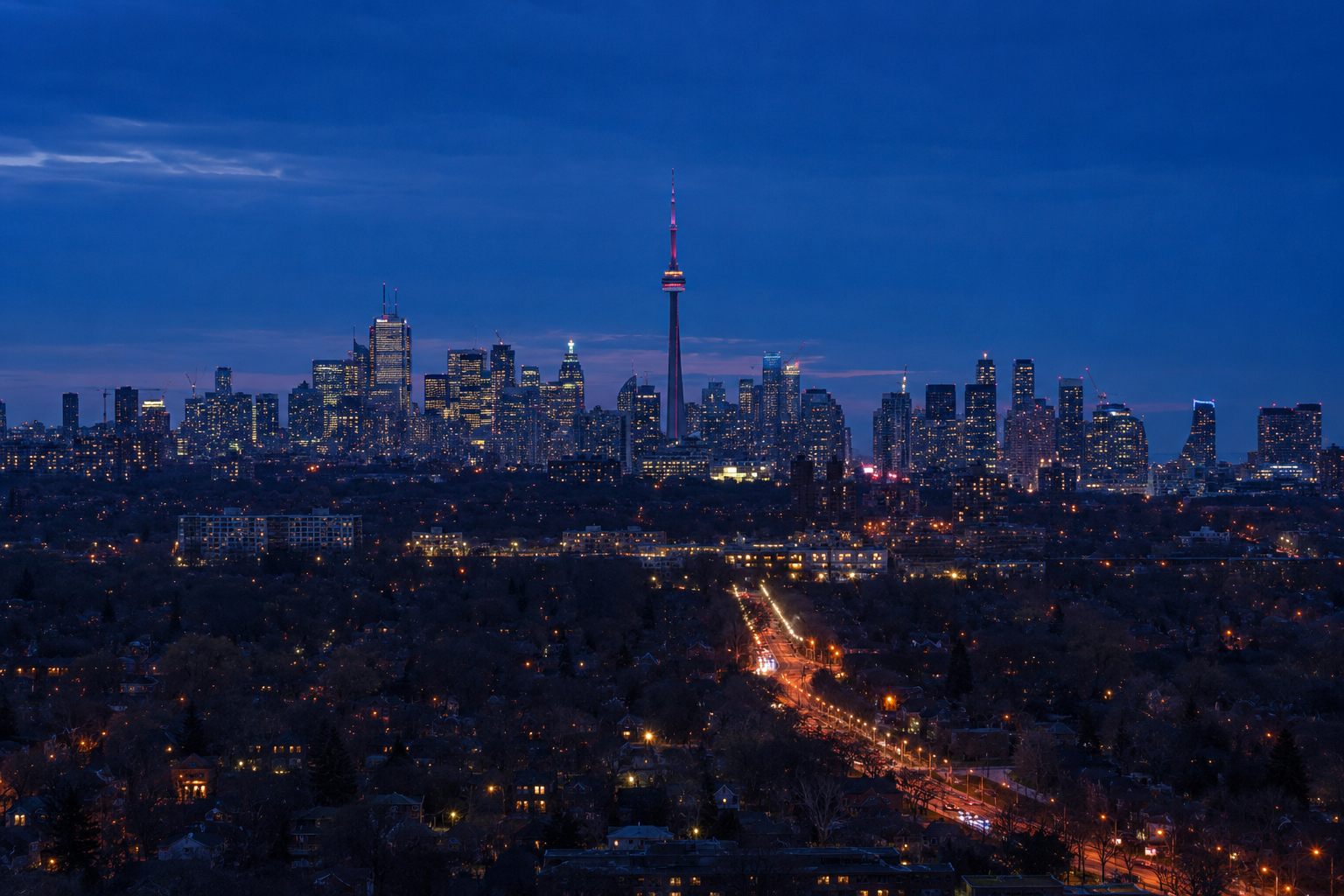
- Downtown Toronto has the province’s latest LCBO hours and the densest convenience store coverage. If anywhere works at 10:45 p.m., it’s here.
- Scarborough, North York and Etobicoke have decent convenience coverage but LCBO stores that generally close earlier than the core, and they’ve been affected by Beer Store closures.
- Mississauga, Brampton, Vaughan, Markham and Richmond Hill follow a similar pattern — earlier LCBO closes, more driving between options, and a Beer Store network that has thinned noticeably.
- Oakville, Burlington, Pickering, Ajax and Oshawa sit at the edges, where an early LCBO close on a Sunday can leave a genuinely long gap.
Delivery is the one option that behaves identically across all of these, because its hours are set provincially rather than store by store.
Holidays
Holidays catch more people than Sundays do, because the closures are total rather than early.
The LCBO is closed outright on New Year’s Day, Family Day, Good Friday and Christmas Day. Around Christmas, stores close early on Christmas Eve, typically 6 p.m., and Boxing Day sees selected stores open on reduced hours. New Year’s Eve is normally a full trading day, with some stores extending.
Licensed delivery services and licensed convenience stores generally operate on holidays within the usual 7 a.m. or 9 a.m. to 11 p.m. windows, which makes them the practical answer on the four days the LCBO doesn’t open at all. Confirm with the specific business rather than assuming.
Planning around all of this
A few habits that remove the problem entirely:
- Check Sunday hours on Saturday. A 6 p.m. Sunday close is early enough that a plan made Sunday afternoon is often already too late.
- Buy spirits during the week. They keep indefinitely, and spirits are the category with the fewest after-hours options.
- Know one licensed convenience store near you. Use the AGCO’s list once and remember the result. Most people don’t know which of their local shops is licensed.
- Set a mental cutoff at 10 p.m. Whatever route you’re taking, the decision needs to be made with room to spare, not at 10:57.
Common questions
Can I buy alcohol after 11 p.m. anywhere in Ontario?
No. Retail sale and delivery both stop at 11 p.m. province-wide. Licensed bars and restaurants can continue serving alcohol for consumption on site later than that, but they can’t sell it to take away outside permitted hours.
Can convenience stores sell vodka or whisky?
No. Beer, cider, wine and ready-to-drink beverages only. Spirits remain restricted to the LCBO, licensed delivery and licensed establishments.
Is alcohol delivery legal in Ontario?
Yes, through a licensed service operating within the 9 a.m. to 11 p.m. window, delivering to a residence or private place, with ID checks. The licence category is the General Delivery Licence, administered by the AGCO.
What if I’m not home when the driver arrives?
Alcohol can’t be left at a door unattended, and it can’t be handed to anyone under 19. Someone of legal age has to receive it in person with ID.
Does delivery run on Sundays and holidays?
The 9 a.m. to 11 p.m. window applies every day, including Sundays and holidays. Individual businesses set their own hours within it, so check.
How late can I order for it to still arrive?
The delivery itself has to be completed by 11 p.m., so work backwards from there rather than from when you place the order.
If you’re out, leave the car
Worth saying plainly. If the evening has reached the point where the LCBO closing is the biggest problem, the car stays where it is. The TTC runs Blue Night service on major corridors overnight, GO covers the wider region, and rideshare and taxis operate across the GTA. Nothing you’re going to buy is worth a licence or worse.
The bottom line
Beer, wine or RTDs, before 11 p.m., near a licensed shop: the convenience store is your fastest route. Spirits, or a Sunday, or a holiday, or you’d simply rather not go out: a licensed delivery service is the option that holds the same hours every day of the week and can carry the full range. After 11 p.m., nothing in Ontario can legally sell you alcohol — and a service that claims it can is telling you something about how it operates.
After Hours Alcohol delivers across Toronto, Scarborough, North York, Etobicoke, Pickering, Ajax, Oshawa, Vaughan, Markham, Richmond Hill, Mississauga, Brampton, Oakville and Burlington. You can browse the full menu or call or text (416) 988-3623 to place an order. If you’re new to ordering this way, our alcohol delivery FAQ and delivery guide cover the rest.